

Tribeca Exhibit Turns Epstein Files Into Massive Public Archive With Trump Timeline
A Tribeca gallery has transformed millions of pages of Jeffrey Epstein-related federal records into a sprawling art installation that also explores his connections to Donald Trump and honors survivors of abuse.
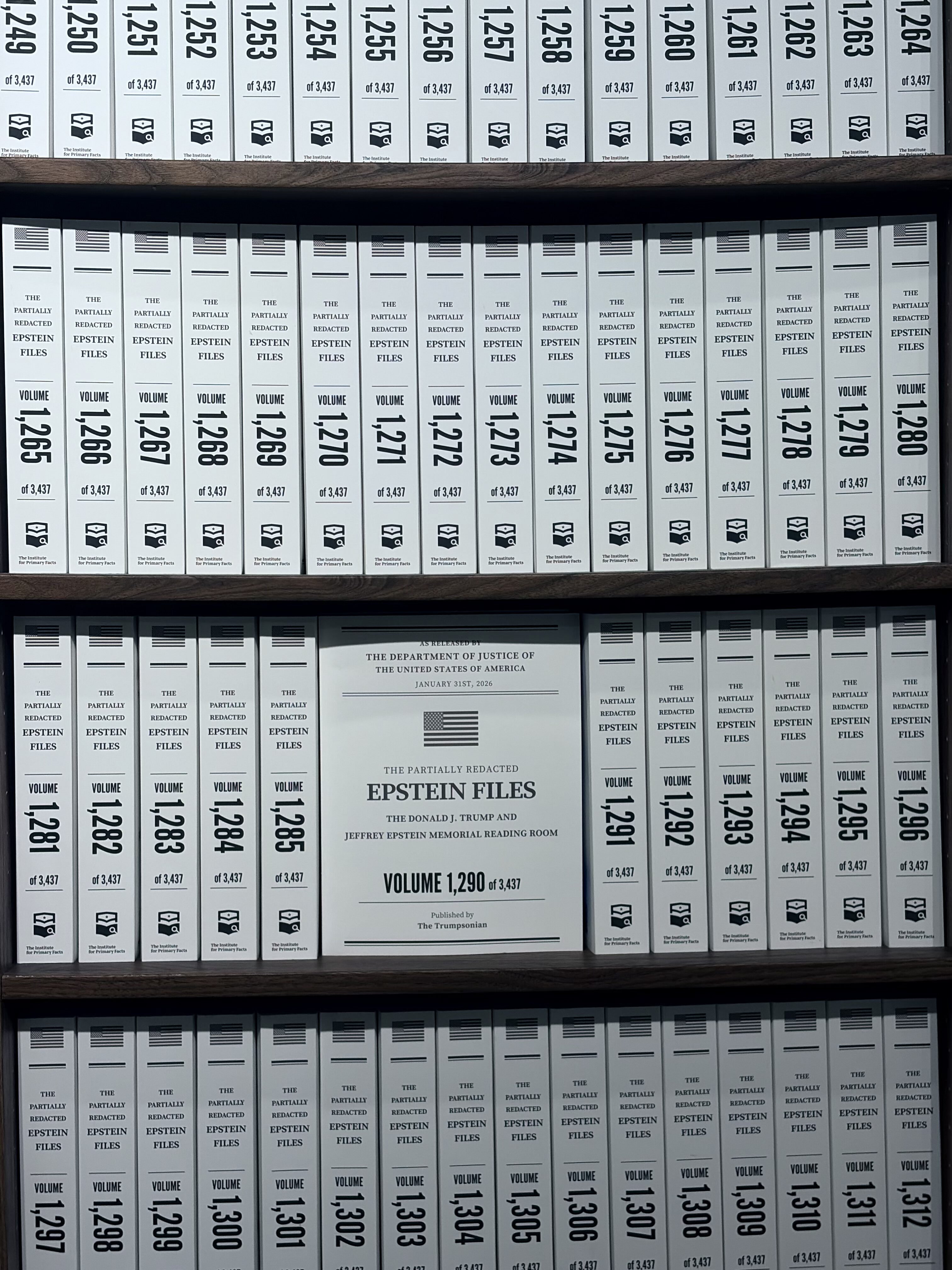
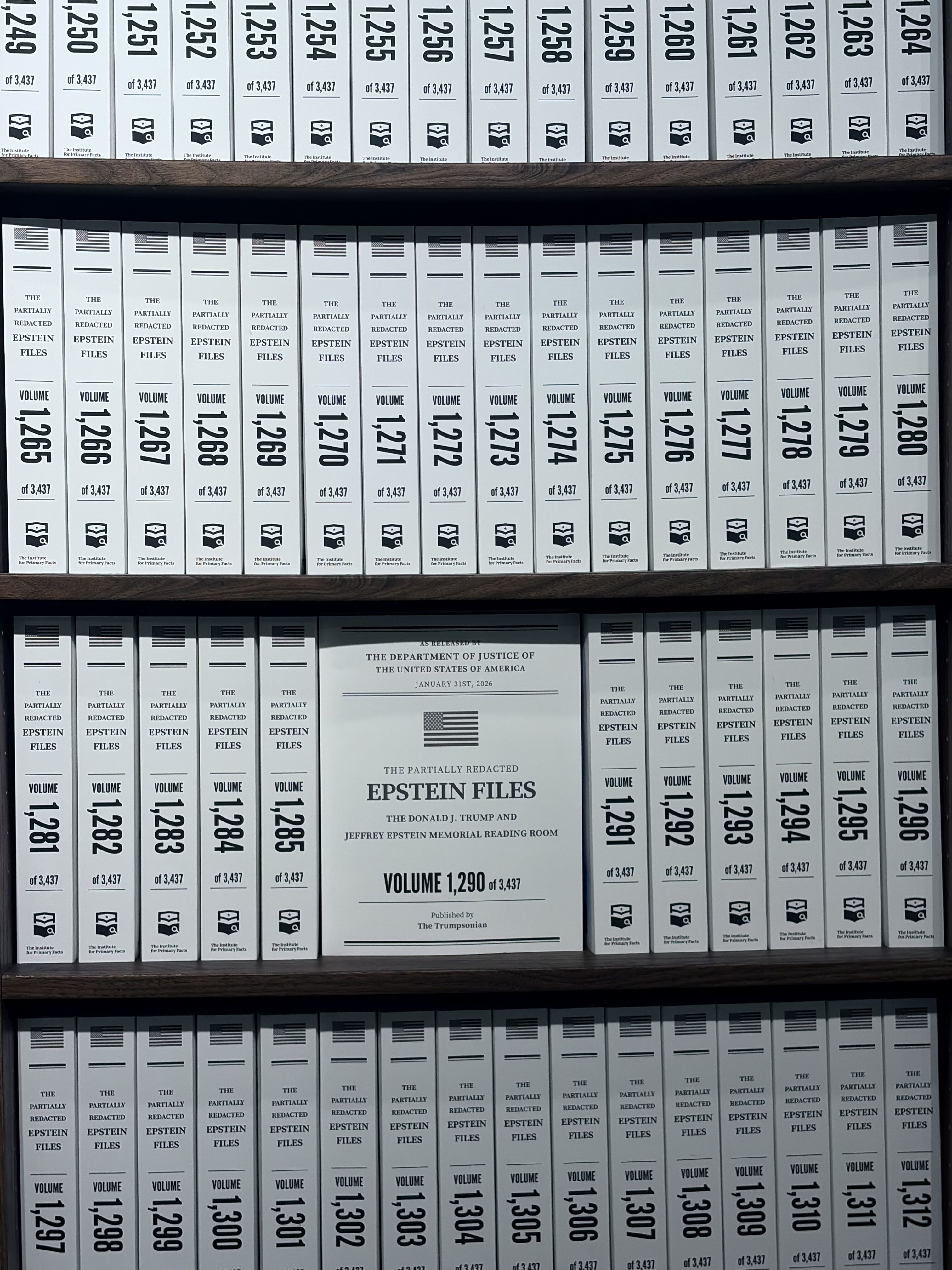
In a quiet Tribeca gallery, more than 3.5 million pages of Department of Justice records tied to Jeffrey Epstein now sit stacked floor to ceiling in what organizers call the “Donald J. Trump and Jeffrey Epstein Memorial Reading Room,” a sprawling art installation examining power, abuse and public memory.
Created by the nonprofit Institute for Primary Facts, the temporary exhibit transforms recently released Epstein-related files into a physical archive spread across two floors in lower Manhattan. Organizers bound the records into more than 3,700 volumes weighing a combined 17,000 pounds, according to reports from Wired.
The installation runs through May 21 and is open by appointment only to visitors 16 and older. General access to the documents remains restricted because many files contain sensitive or partially redacted information tied to survivors of Epstein’s abuse. Limited research access is available to journalists, legal professionals and academics.
The latest wave of Epstein documents became public earlier this year following continued legal pressure for greater transparency surrounding the financier’s criminal network and associations with high-profile figures. Public reaction intensified online as renewed scrutiny focused on Epstein’s past connections to politicians, celebrities and business leaders, including President Donald Trump. While Trump has repeatedly denied wrongdoing and said he cut ties with Epstein years before the financier’s 2019 arrest, renewed discussion surrounding their former social relationship fueled debate across social media and news outlets after the records resurfaced and mentioned Trump. .
Beyond the sheer scale of the archive, the exhibit aims to confront the cultural and political networks surrounding Epstein, the financier and convicted sex offender who died in federal custody in 2019 while awaiting trial on sex trafficking charges.
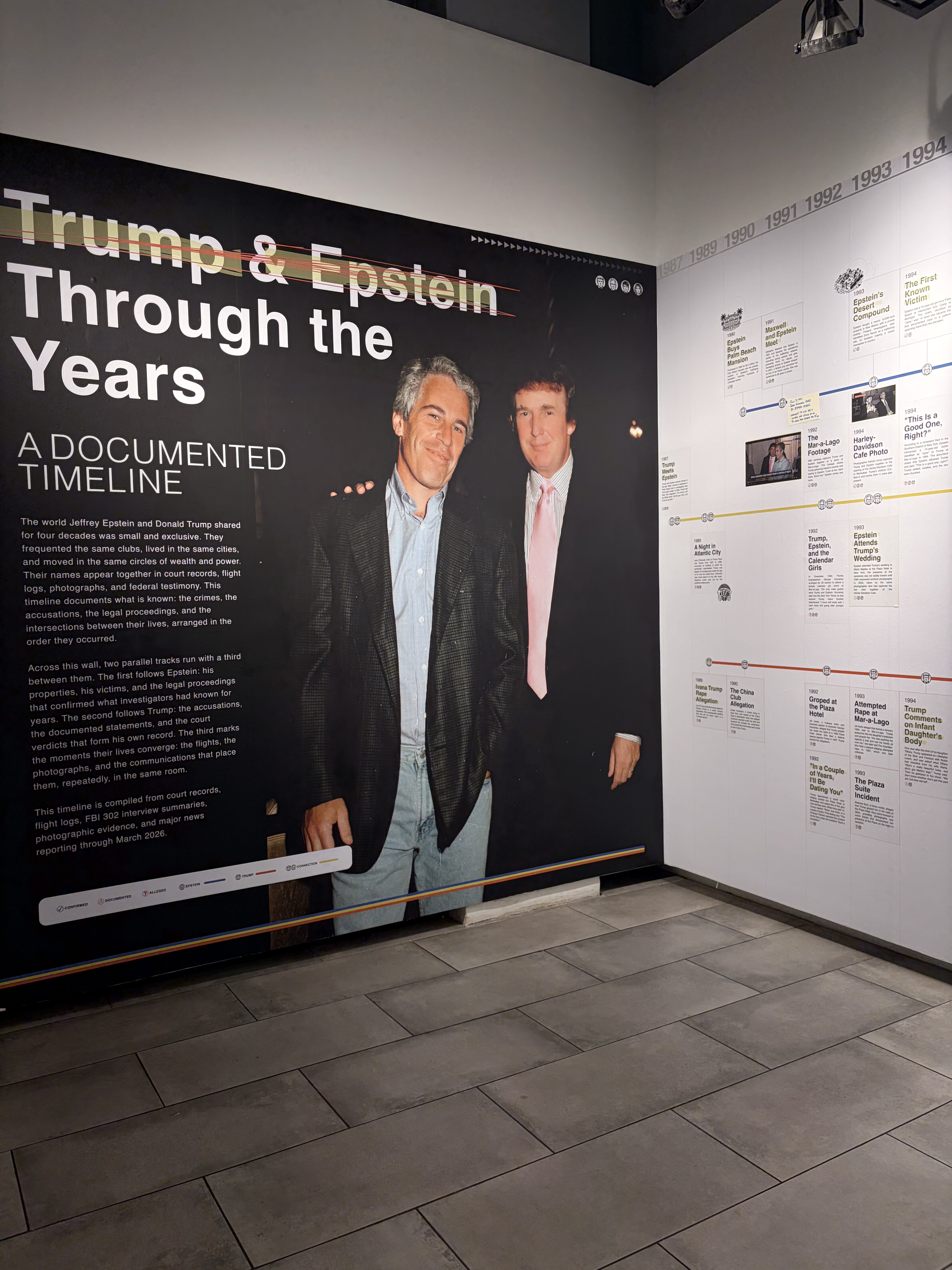
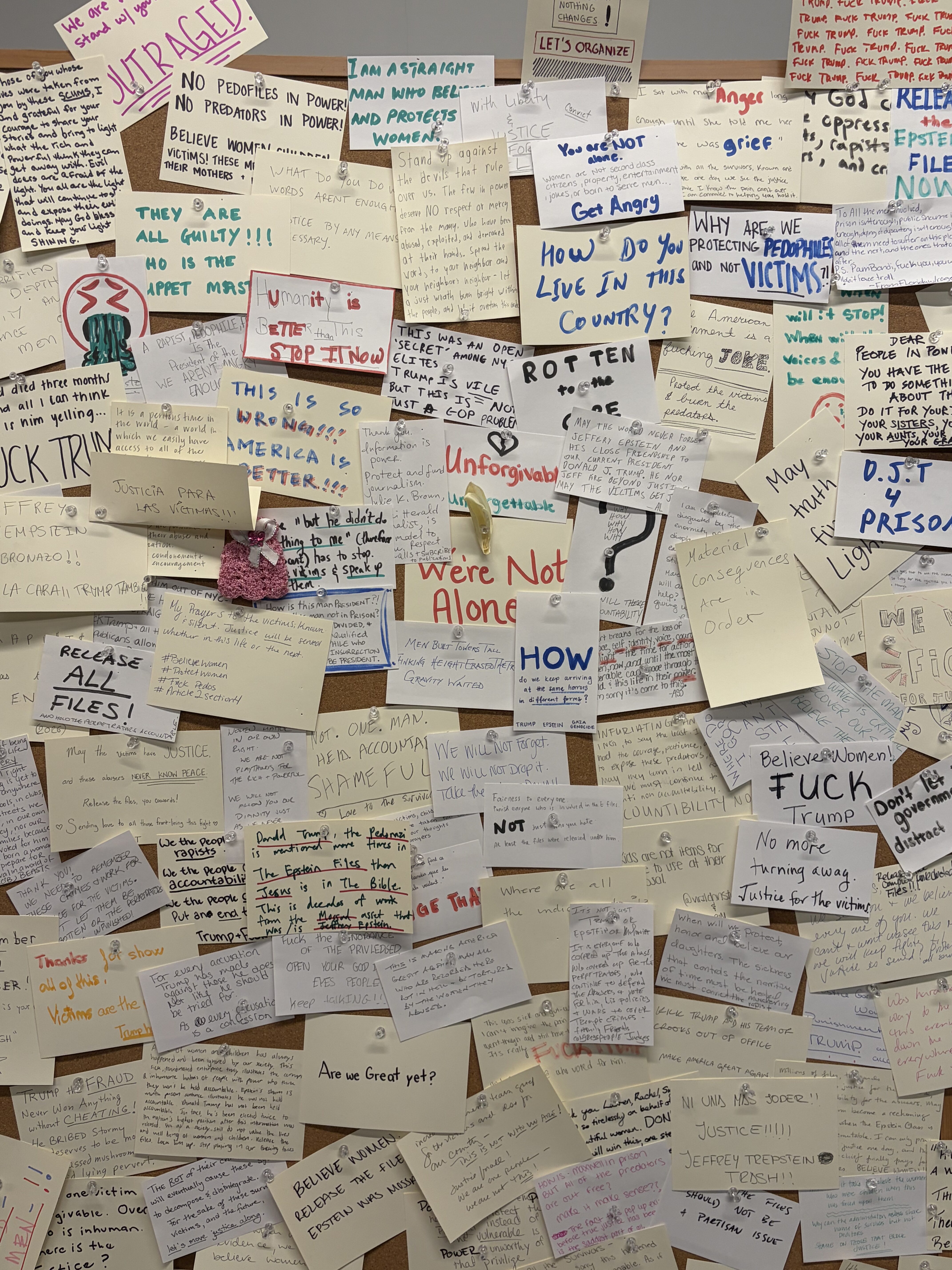
A central feature of the installation is a timeline tracing Epstein’s long-documented relationship with Trump, beginning with their reported introduction in Palm Beach in 1987 and continuing through Epstein’s death in 2019, and the release of the files in 2025.
The exhibit also includes a memorial honoring more than 1,200 known survivors connected to Epstein’s abuse network. Candles placed across the gallery floor serve as a tribute to victims whose experiences became part of one of the most high-profile criminal investigations in recent history.
The Institute for Primary Facts describes itself as a nonprofit organization dedicated to government transparency and civic literacy through immersive public exhibitions. Organizers said the goal of the project is to make the scale of the Epstein files tangible in a way digital databases cannot.
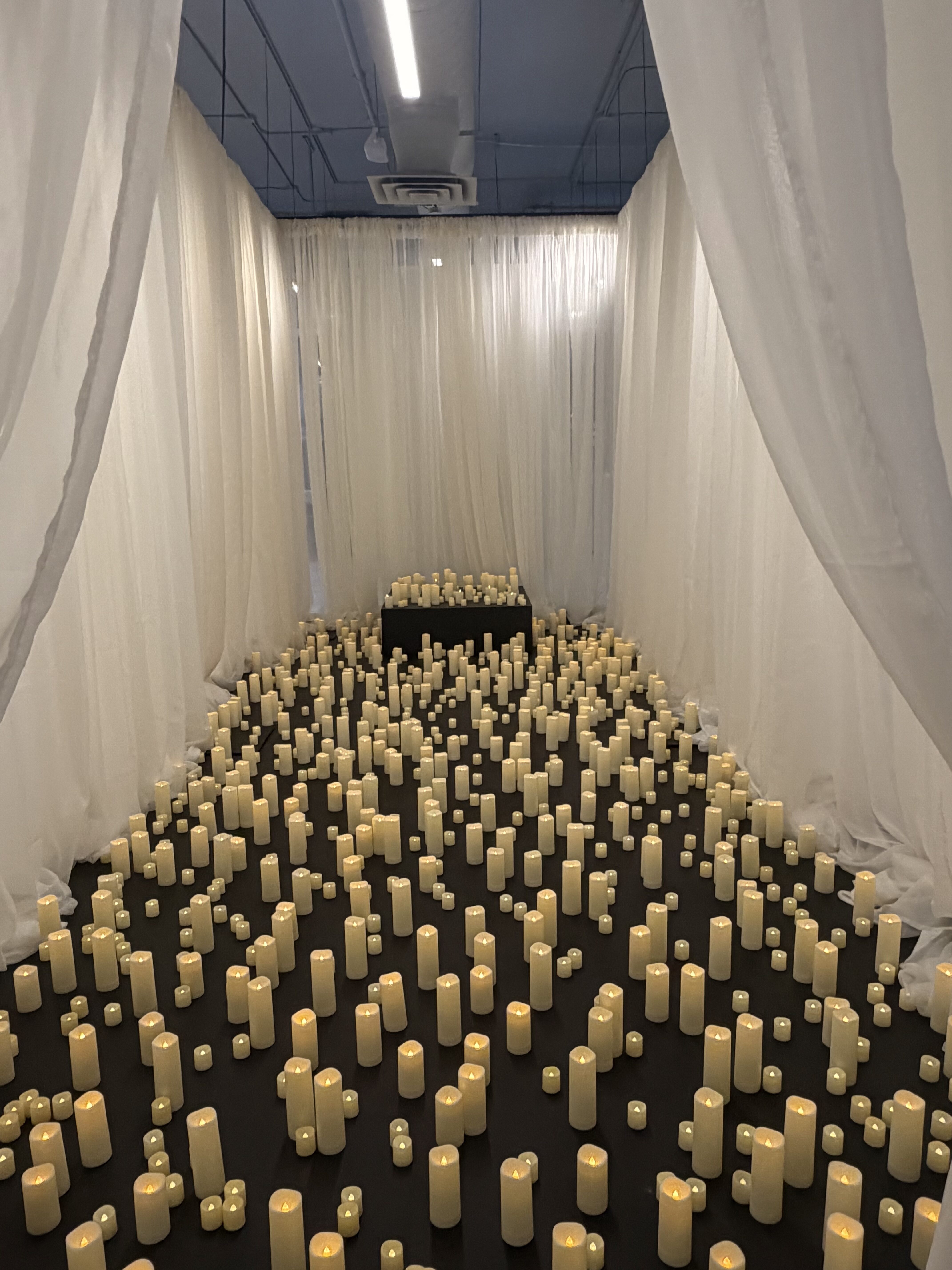

By converting millions of pages into a towering physical structure, the installation reframes court records and investigative documents as both historical evidence and public testimony.
Set against the backdrop of downtown Manhattan’s gallery scene, the reading room has quickly drawn attention online for its provocative title and its intersection of politics, art and public accountability.
The exhibit remains on view in Tribeca through May 21.
Photos by Sophia Elidrissi