
Christina Richardson on BESTIES and Beyond
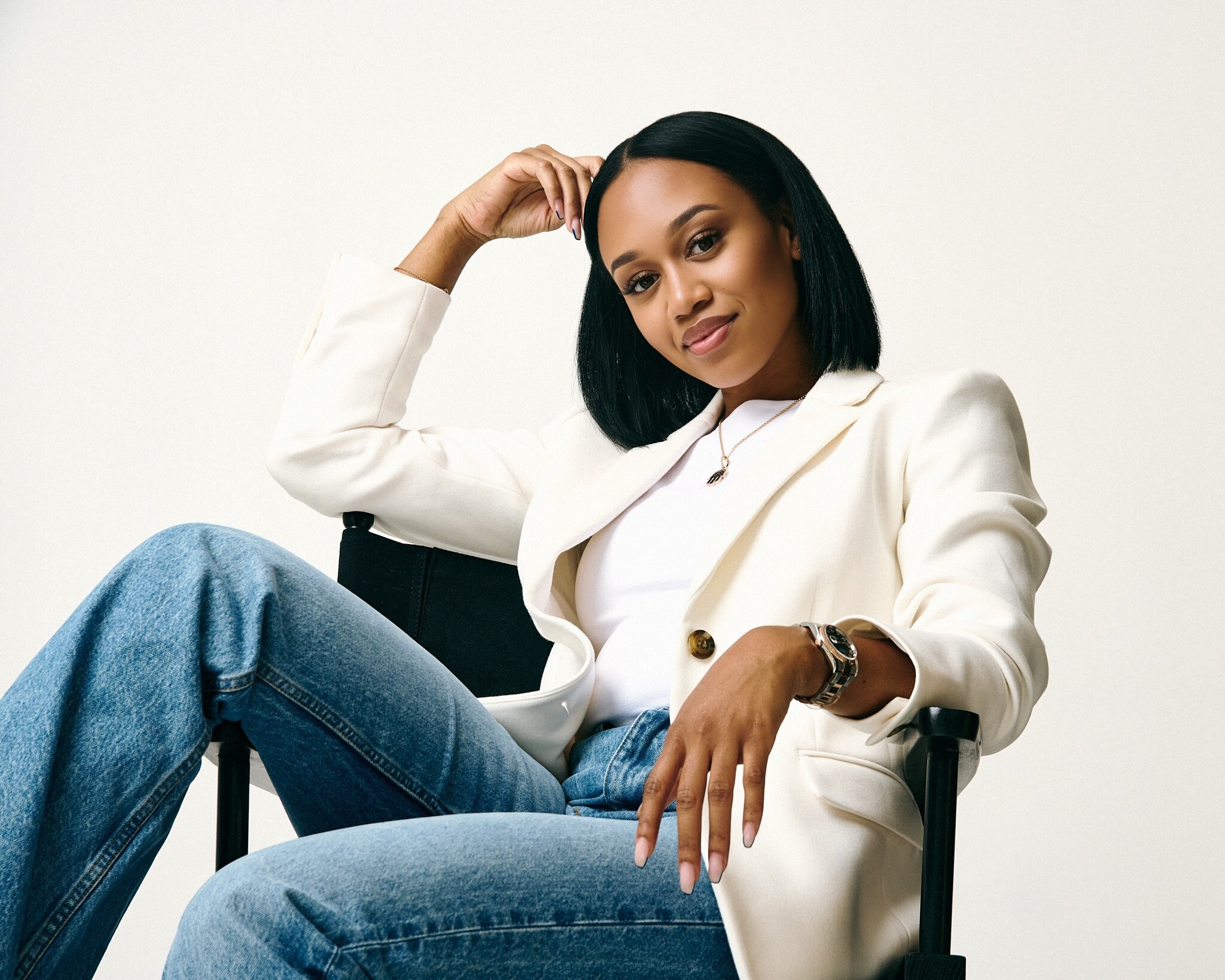
For filmmaker and director Christina Richardson, storytelling has always been a passion. From discovering the magic of filmmaking at just 12 years old to independently creating BESTIES, her journey has been one of determination, creativity, and perseverance.
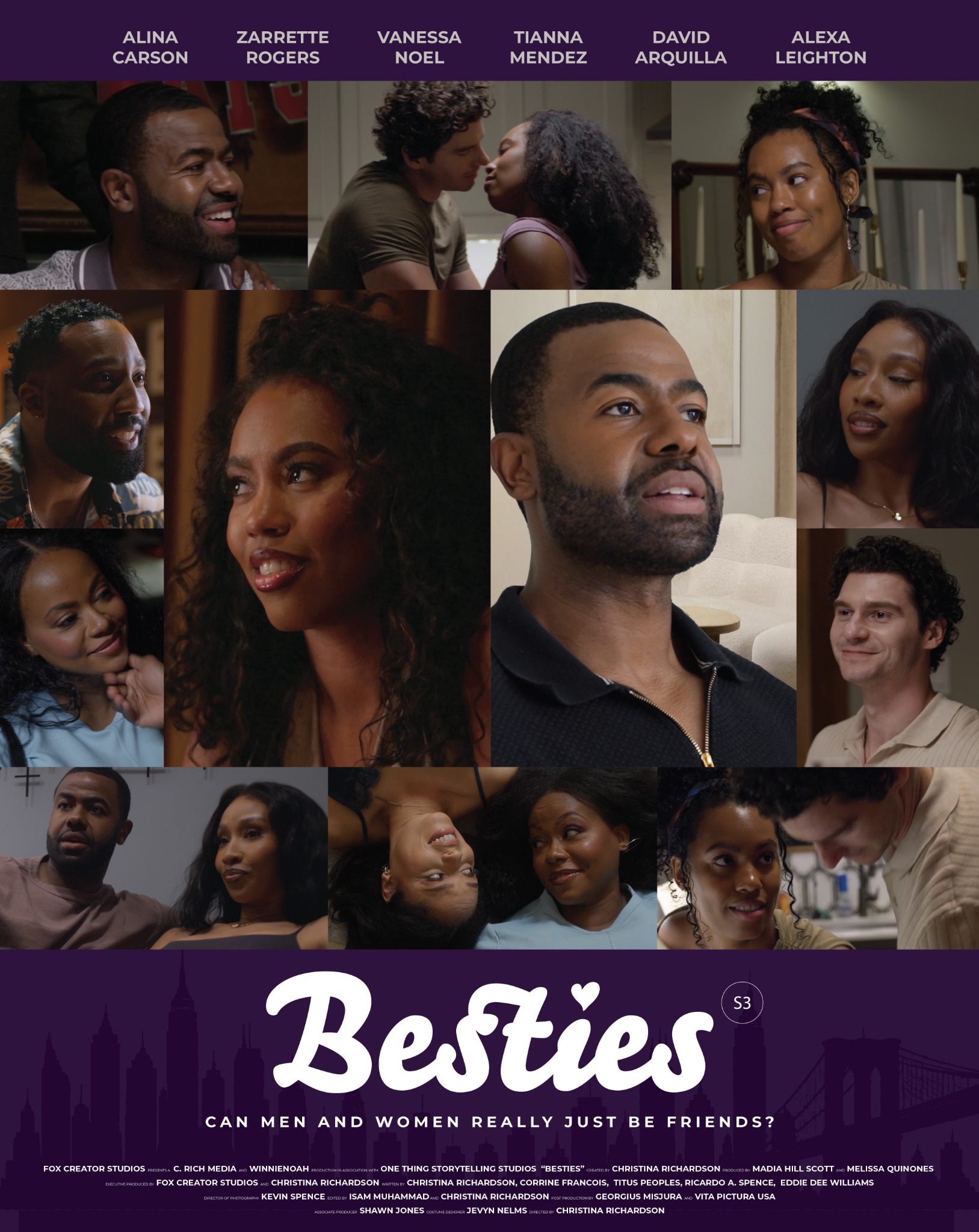
Now entering its third season in partnership with FOX Creator Studios, BESTIES marks an exciting new chapter in Richardson’s career. I had the pleasure of catching up with Christina to discuss her journey behind the camera, the evolution of BESTIES, and her vision for the future. From the challenges of independent filmmaking to creating opportunities for the next generation, our conversation offered a closer look at the woman behind the stories.
Zoey Cross: Your journey into filmmaking began at just 12 years old, when a director invited you to sit in their chair on the set of a McDonald’s commercial. Looking back, how did that moment shape the filmmaker and storyteller you are today?
Christina Richardson: I was 12 years old when I booked a McDonald’s commercial, and I remember being completely fascinated by everything happening around me.
We were shooting at night, and at one point, I was getting emotional because I thought they weren’t going to use me. The director invited me to sit in his chair, and then something incredible happened. The crew rolled in this enormous light, positioned it outside the house, and shone it through a window. Suddenly, the entire house was illuminated like it was daytime. He literally brought out the sun!
I couldn’t believe what I was seeing. I had no idea you could manipulate reality like that through filmmaking.
I also performed a stunt in that commercial. My character was frozen from hunger, so they put me in a harness and dragged me down a flight of stairs. Imagine being 12 years old and experiencing all of that on your first professional set!
That experience opened my eyes to an entirely different world. I realized filmmaking was so much bigger than what happened in front of the camera. There was an entire team of people creating the illusion, and someone was responsible for bringing all those moving parts together.
From that day forward, I knew I wanted to be a director. Today, one of my favorite things about directing is still that same magic. Having an idea in your head and working with a team of talented people to bring something to life that didn’t exist before.
Creating BESTIES Independently
Zoey Cross: You built the first two seasons of BESTIES independently. What inspired the series, and what were some of the biggest challenges and lessons that came with bringing your vision to life without the backing of a major studio?
Christina Richardson: BESTIES came into my life during one of the most difficult periods I’ve ever experienced. In 2018, the same year we shot the original series, I lost my mother.
I was grieving, and BESTIES became my escape. Creating gave me somewhere to put my energy and emotions. I could immerse myself in these characters and their problems instead of constantly sitting in my own.
At the time, I was also a young mother. I remember so many nights editing episodes with my daughter asleep in my arms. I was balancing motherhood, grief, work, and this dream I was determined to bring to life.
The series itself was inspired by a simple question: Can men and women really just be friends?
I wanted to explore that through Rayven and Eric, two best friends navigating dating, sex, relationships, and boundaries. Eric convinces Rayven that she needs to stop getting emotionally attached to every man she sleeps with and suggests she try having a one-night stand. That one suggestion opens the door to a much bigger conversation about friendship and relationships.
When you’re building something independently, the biggest challenge is almost always resources. You’re constantly figuring out how to do more with less. You’re wearing multiple hats, calling in favors, and finding creative solutions to problems that money would otherwise solve.
But those experiences taught me resourcefulness, discipline, and the importance of believing in your vision before anyone else does.
BESTIES wasn’t created because I had the perfect circumstances. It was created in spite of them. And looking back, I’m grateful I didn’t wait for everything to be perfect before I started.
BESTIES Season 3 and FOX Creator Studios
Zoey Cross: With Season 3 of BESTIES launching in partnership with FOX Creator Studios, how has that collaboration elevated the series, and what can audiences expect from this new chapter?
Christina Richardson: The biggest difference is that we finally had an actual production budget!
For the first two seasons, we were incredibly resourceful, but there’s only so much you can accomplish without the proper financial support. Partnering with FOX Creator Studios allowed us to approach production differently.
We could secure locations, invest in set design, and really build out the world of BESTIES. More importantly, we could compensate our crew for their work. That was huge for me because so many talented people had contributed to this series over the years, often making sacrifices because they believed in what we were creating.
The partnership has also opened doors for brand collaborations, including our relationship with Record Room in Long Island City, and expanded distribution through Tubi.
For Season 3, audiences can expect to learn more about the history of these characters, particularly how Rayven met Derrick and how their relationships became so complicated.
We’re also introducing something I’m extremely excited about: our dual-format distribution model.
Audiences can experience BESTIES as a vertical micro series on social media and watch the extended, long-form version on Tubi.
It’s the same story, but we’re giving audiences multiple ways to experience it.
And for me, that’s what this partnership represents. Not changing what BESTIES is, but giving us the resources and opportunities to show people what it can become.
The Evolution of Storytelling
Zoey Cross: The entertainment industry is evolving, particularly with the rise of social-first storytelling. As a director working across vertical and traditional horizontal formats, how do you approach storytelling differently while maintaining the emotional depth of your work?
Christina Richardson: I believe in meeting audiences where they are.
People consume entertainment differently today. Some people want to sit down in front of their televisions and watch a full episode, while others discover their favorite shows scrolling through their phones.
Neither experience is less valuable than the other.
That’s part of why I’m so excited about what we’re doing with BESTIES. We’ve developed a dual-format series that allows audiences to experience the same narrative both vertically on social media and horizontally in long-form episodes on Tubi.
But from a directing standpoint, each format requires a different approach.
Vertical storytelling forces you to be extremely intentional. You have less screen space, shorter runtimes, and a much smaller window to capture someone’s attention. Every shot, line of dialogue, and emotional beat has to earn its place.
Horizontal storytelling gives you more room to establish environments, explore relationships, and allow moments to breathe.
The challenge is making sure neither format compromises the story.
I don’t believe emotional depth is determined by runtime or aspect ratio. It’s determined by how well you understand your characters and how effectively you communicate their experiences.
My goal is to create stories that resonate regardless of where or how someone chooses to watch them.
Zoey Cross: Your portfolio spans major brands, music, and scripted entertainment. How do you maintain your creative identity when moving between commercial projects and more personal, character-driven stories?
Christina Richardson: I don’t necessarily separate commercial directing from narrative storytelling as much as people might think.
At the center of both is human connection.
Whether I’m directing a campaign for a major brand or an episode of BESTIES, I’m always thinking about what I want the audience to feel and how the visuals support that emotion.
My background has also given me the opportunity to learn from different creative environments. Working in commercials taught me precision, preparation, and how to communicate a vision within very specific parameters. Music videos allowed me to experiment with visual language, rhythm, and emotion. Scripted storytelling gives me the opportunity to develop characters and explore their humanity over time.
I think all of those experiences make me a stronger director.
My creative identity isn’t necessarily defined by a particular genre or visual style. It’s defined by my approach to storytelling. I want my work to feel intentional, emotionally honest, and connected to real human experiences.
Zoey Cross: You’ve described yourself as an actors’ director who values collaboration and creative freedom. How do you create an environment where your cast feels comfortable taking risks and bringing authenticity to their performances?
Christina Richardson: Rehearsals are a huge part of my process.
I love creating space for actors to explore their characters before we ever get to set. During rehearsals, we get to play. We try different approaches, experiment with dialogue, explore motivations, and discover moments that might not have been obvious on the page.
I believe that’s where a lot of the magic happens.
By the time we get to set, we’ve already done the work to understand what we’re trying to accomplish. We know the emotional beats we want to hit, but there’s still room for spontaneity.
I’m also very collaborative. I come in with a clear vision, but I never want actors to feel like they’re simply there to execute my instructions. They’re artists, and they bring their own experiences, instincts, and interpretations to these characters.
Sometimes an actor will make a choice that I never considered, and it ends up being better than what I originally imagined.
I think the key is creating an environment where people feel safe enough to take risks. Not every idea is going to work, and that’s okay. That’s why we explore.
Ultimately, I want actors to feel ownership over their performances while trusting me to guide the overall story.
Zoey Cross: As a Black woman navigating the film and television industry, what barriers have you encountered in establishing yourself as a director, and what changes would you like to see in the opportunities available to women of color behind the camera?
Christina Richardson: I actually have a unique way of looking at barriers, and I don’t necessarily approach them solely through the lens of being a Black woman.
I think almost every director trying to establish a successful career encounters the same frustrating catch-22: You need experience to get hired as a director, but you need to get hired as a director to gain experience. So how do you get the opportunity if nobody is willing to give you the opportunity?
It’s a cycle that can be incredibly difficult to break.
That’s one reason I believe film school can be valuable, even though I didn’t attend film school myself. Film school provides access to equipment, collaborators, structured learning, and opportunities to practice telling stories in a professional environment.
But even with all those resources, there’s something nobody can do for you, and that’s finding your voice.
You have to do that work yourself.
You have to make things, experiment, fail, learn, and figure out what you actually have to say as a filmmaker.
I certainly recognize that access and opportunity aren’t distributed equally, and I’d love to see more pathways for women of color to gain meaningful professional experience.
But I also believe that while we continue pushing for more opportunities, we have to be willing to create our own.
That’s been a major part of my journey. I didn’t wait for someone to hire me to direct BESTIES. I created it, directed it, and used that experience to continue developing my craft.
The Bronx Film Initiative
Zoey Cross: Through the Bronx Film Initiative, you’re creating opportunities for young creatives from underrepresented communities. Why was establishing this organization important to you, and what kind of lasting impact do you hope it will have on the next generation of filmmakers?
Christina Richardson: I understand how powerful exposure can be because my own journey started with exposure.
At 12 years old, I had an opportunity to experience a professional film set, and that experience changed the trajectory of my life.
Not every young person gets that opportunity. There are talented kids with incredible imaginations who have never met a director, stepped onto a film set, or considered that a career in filmmaking could be possible for them.
The Bronx Film Initiative is about helping bridge that gap.
I want young creatives to have access to the tools, education, mentorship, and professional environments that can help them turn their interests into real opportunities.
But it’s also about showing them the range of careers that exist in this industry. Everybody doesn’t have to be a director or an actor. There are cinematographers, editors, production designers, sound mixers, producers, and so many other people who make filmmaking possible.
My hope is that we’re not simply inspiring the next generation. We’re helping prepare them to enter the industry with practical experience, confidence, and a network of people who believe in their potential.
Because sometimes one opportunity is all it takes to change the direction of someone’s life.
Zoey Cross: Audiences are discovering scripted content through social media in ways we haven’t seen before. Do you believe platforms built around short-form content are creating a new pathway for independent filmmakers to reach mainstream audiences, or are they fundamentally changing what storytelling looks like?
Christina Richardson: I think both things are happening simultaneously, and BESTIES is a perfect example of that evolution.
Social media has completely changed the relationship between filmmakers and audiences. Traditionally, you needed a network, distributor, or studio to get your work in front of a significant audience.
Today, independent filmmakers can create their own content, distribute it directly, and build an audience without waiting for permission.
But what’s even more interesting to me is what happens after you build that audience.
With BESTIES, we made our public debut on IGTV in 2019, relaunched the series on social media in 2025, and now we’re partnering with FOX Creator Studios while expanding distribution to Tubi.
We’re also experimenting with a dual-format approach that allows the same story to live in two different environments.
Audiences can discover BESTIES through a two-minute vertical episode while scrolling through Instagram, then go to Tubi and watch an extended version of that story in a traditional horizontal format.
I think that’s where the real opportunity is.
We’re no longer limited to thinking about social media as simply a marketing tool for film and television. It can be the place where stories originate, audiences develop, and intellectual property grows.
I don’t believe short-form content is replacing traditional storytelling. I believe it’s creating new entry points into it.
And for independent filmmakers, that changes everything.
Zoey Cross: You’ve built a career around telling stories that challenge perspectives and connect people across cultures. As you enter this next chapter with BESTIES and your growing body of work, what stories are you most passionate about telling next, and what legacy do you hope to build as a filmmaker?
Christina Richardson: One of the things I’m most excited about is expanding BESTIES beyond the characters and city where it originated.
I’ve always envisioned BESTIES as a franchise.
The central theme of the series is friendship, specifically the complexities of relationships between male and female best friends. But those dynamics aren’t unique to Rayven and Eric, and they certainly aren’t unique to New York City.
We’re exploring the possibilities of BESTIES LA, BESTIES Kenya, and eventually taking the series to different cities across the country and around the world.
Different casts. Different characters. Different storylines. But the same universal themes of friendship, love, loyalty, boundaries, and relationships.
I think there’s something really exciting about exploring how those dynamics change across cultures and communities while still finding the things that connect us.
Beyond BESTIES, I want to continue directing across genres and telling stories that explore the complexities of human behavior. I’m drawn to flawed characters, complicated relationships, and stories that challenge audiences to see things from a different perspective.
When I think about legacy, I want to build more than a filmography.
I want to build intellectual property, create opportunities for other creatives, and demonstrate that independent filmmakers can develop projects with the potential to become global franchises.
But none of this happens alone. I’m incredibly proud of the team we’re building with BESTIES. My producers, Madia Hill Scott and Melissa Quinones, Winnienoah Productions; my director of photography, Kevin Spence; and my writing team, Corrine Francois, Titus Peoples, Eddie Dee Williams, and Ricardo A. Spence. These are talented people who bring their own perspectives, creativity, and expertise to the table. As a director, you can have the vision, but you need people who believe in it and have the ability to help you execute it. That’s what makes filmmaking so special to me. It’s collaborative.
Most importantly, I want my career to be an example of what’s possible when you believe in your vision enough to do the work, even before the rest of the world sees what you see.
Christina Richardson’s journey reflects the power of believing in a vision long before others recognize its potential. With BESTIES expanding its reach and new opportunities on the horizon, she continues to push creative boundaries while opening doors for the next generation of filmmakers. For Richardson, this is only the beginning.
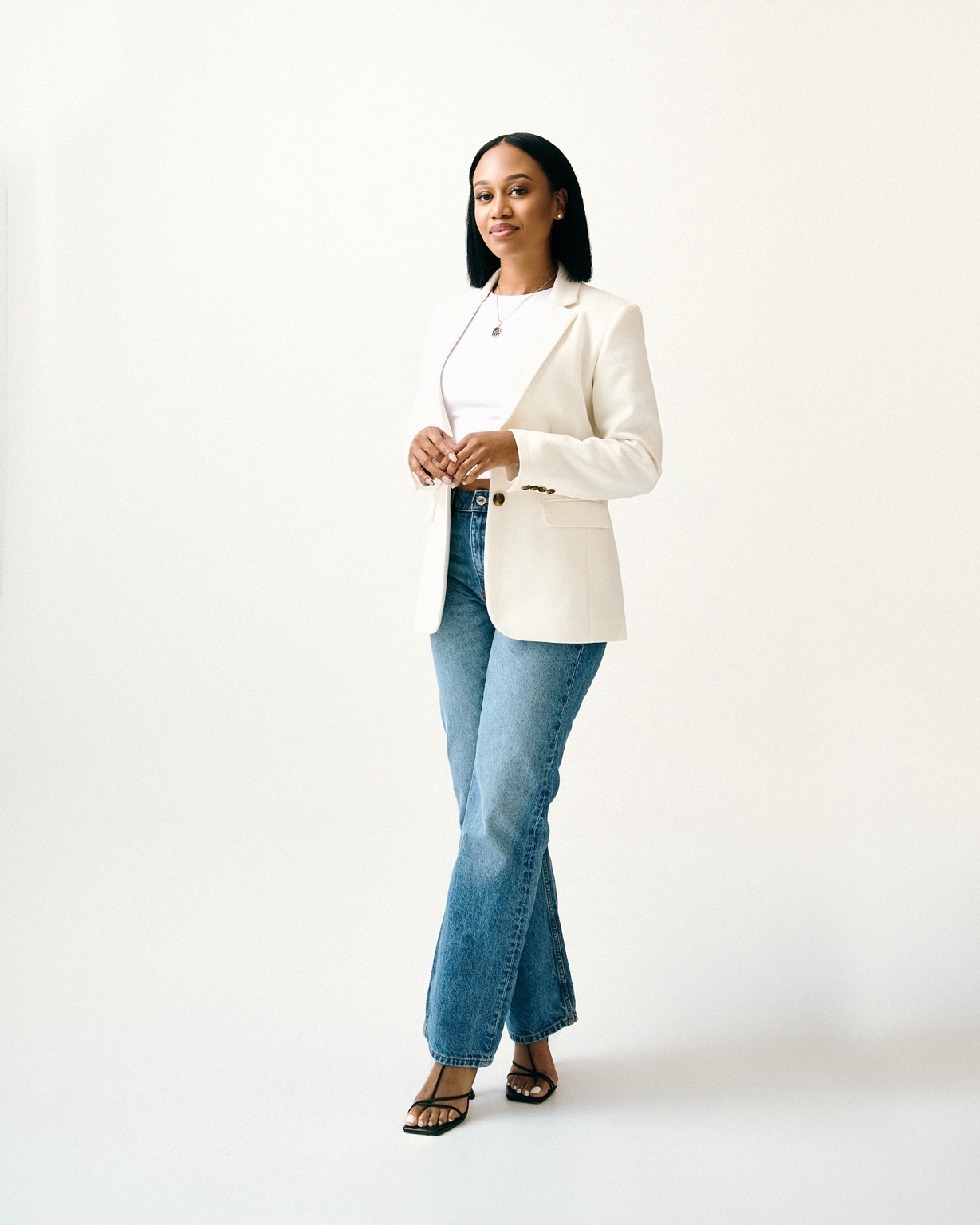
Photo Credit: J. McKee & Co.