
An Interview With Mimi Barks
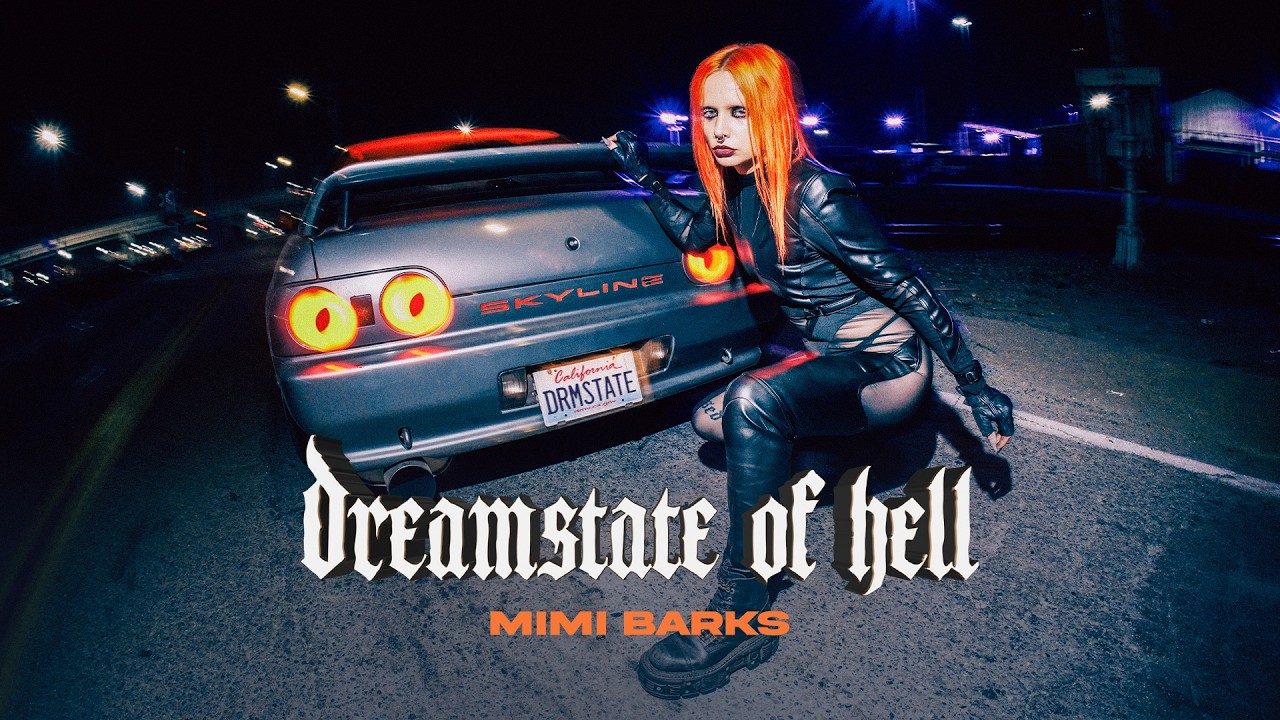
Mimi Barks returns with her brand new single and video, “Dreamstate Of Hell,” a dark and emotionally charged statement that opens the next chapter of her DOOM TRAP world.
What first made you want to pursue music?
I don’t think there was ever a moment where I decided to pursue music. Music was just always there. I grew up in Germany when Eurodance was everywhere, I had my first ever cassette of Michael Jackson’s HIStory and my first drum kit was this tiny thing in my grandma’s basement when I was four or five. But I don’t think any of those things made me a musician. Creating has always felt more like a natural language to me than a career choice. But after going to my first festival, feeling the bass from the subwoofers move through my body and experiencing the euphoria the performers created, I knew I wanted to become a rockstar.
How did Berlin shape you as an artist?
Berlin was the first place where I really felt at home. There was a freedom there that I hadn’t experienced anywhere else. You can be whatever you want in Berlin. You can reinvent yourself, experiment, disappear into a subculture or create your own world entirely and nobody really cares. That freedom shaped me enormously. It gave me the space to figure out who I was without feeling like I had to fit into someone else’s idea of me.
What drew you to blending metal, punk, hip-hop, and trap?
I never really saw them as separate things. Genre is just a human way of categorizing something that already exists. I grew up listening to completely different worlds of music and I never understood why I was supposed to choose one. The Prodigy was a big confirmation of that for me seeing that energy and realizing you can create your own rules instead of following somebody else’s.
When did “DOOM TRAP” become your identity?
It wasn’t really a decision. It became a name for what I was already doing. I needed something to describe this collision of metal, trap, industrial, hip-hop, the darkness of the lyrics and everything else that existed in my world. Eventually DOOM TRAP stopped being just a genre description and became its own universe.
How has your sound evolved since This Is Doom Trap?
Dreamstate of Fear is more internal. THIS IS DOOM TRAP carried a lot of aggression, resistance and outward energy. This EP came from a very different place loss, grief, anxiety, spirituality and transformation. But I never write with a plan. Everything is intuitive. I follow whatever needs to come out, and everything happens in its own divine timing.
What inspired “Dreamstate Of Hell”?
Dreamstate of Hell came from the idea of consciously choosing hell as my own reality. As a state of consciousness I chose to inhabit and experience. There’s a certain power in accepting the darkness rather than constantly trying to escape it but then again it can be very self-destructive if you don’t accept it for what it is.
What does “heaven and hell” mean to you personally?
They’re two sides of the same thing. I don’t believe in absolute opposites. Fear and love, destruction and creation, pain and beauty, they exist because of each other. The universal law of polarity is a big part of how I see reality. Everything is one but experienced in different degrees. You can be broken and powerful at the same time. Vulnerability can be strength. Even destruction can become creation.
How did moving to Los Angeles influence this new era?
I was always pretty alone in this, so in that sense it doesn’t really matter where I am. I create my own world and carry it with me. Los Angeles simply gives me the opportunity to experience the fruits of everything I’ve built over the years and to actually live.
The people, the opportunities, the lifestyle, the experiences. It feels like I’m finally able to exist inside something I spent so long creating.
What can fans expect from Dreamstate of Fear?
A world rather than just a collection of songs. The music, artwork, fashion, videos, stage design and physical products are all part of the same universe. For me they’re fifty-fifty the visual and the musical output are inseparable. It’s a journey from madness and anxiety into love, spirituality and transformation. But I’m not trying to tell anyone what they should take away from it. I create primarily for myself. Whatever someone finds in it belongs to them.
How did the video bring “Dreamstate Of Hell” to life?
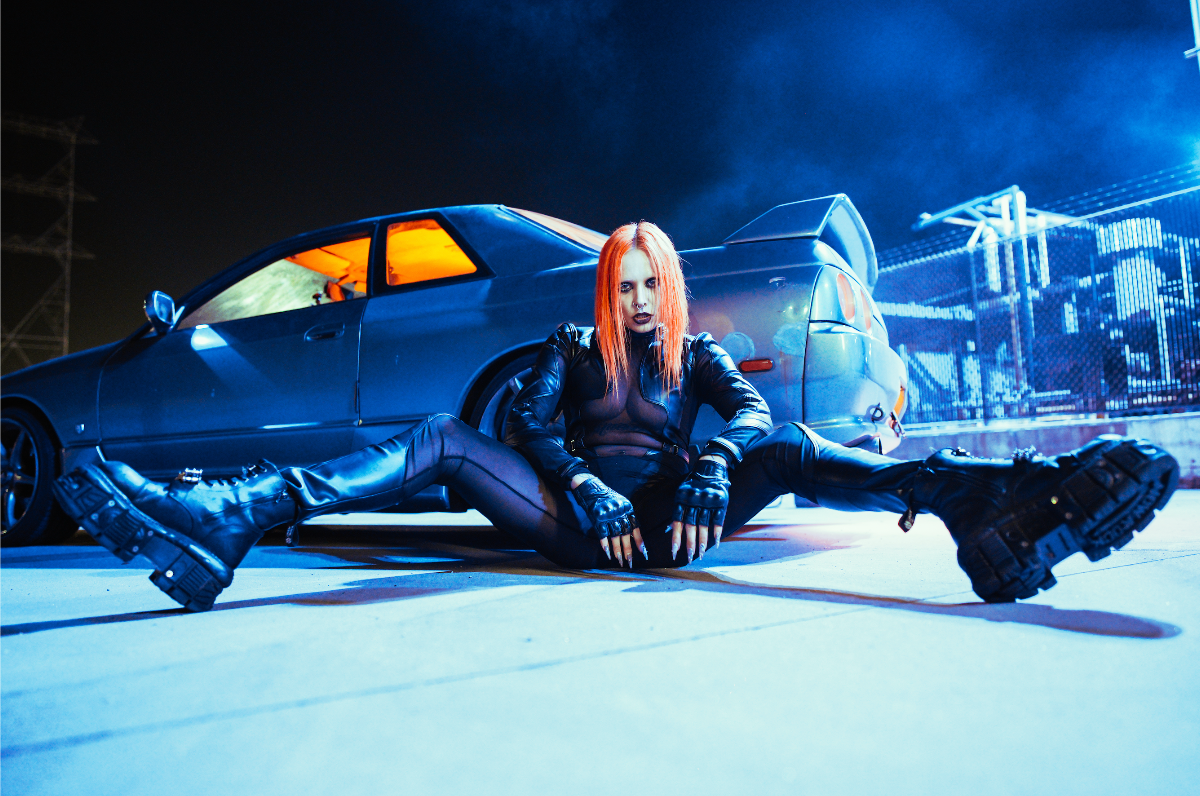
I wanted the video to feel like a fever dream, like you’re experiencing the song rather than watching a story that explains it. Fallen Angels and The Fast and the Furious: Tokyo Drift were both inspirations for the visuals. I was already living in what felt like a dreamstate of hell in Downtown LA. It’s dirty and rough but somehow romantic at the same time. I wanted to capture that contradiction. For me the visual world and the music are inseparable. The video is just another dimension of the same universe.
What does performing your first U.S. tour mean to you?
It honestly felt inevitable to me. Three years ago, I had a spiritual experience where my higher self showed me that I would be living and touring in the States. I saw it before any of it was actually happening, so when it eventually became reality, it didn’t feel completely foreign to me. I always knew on some level that this was going to happen. Touring means more to me than almost anything else. I love the real life connection, being in a room with actual people and feeling that energy physically. Finally getting some of that energy back you put out there all those years.
What’s next for Mimi Barks after this chapter?
I don’t really think in terms of a final destination anymore. I used to chase milestones constantly but eventually I realised I was missing the actual journey. So I trust the process. I don’t know exactly what’s next and I don’t need to. I’ll keep creating, touring, experiencing life and following whatever feels real. Everything comes when it’s supposed to. Nothing really matters and that makes everything possible.