


Fab Morvan Interview: A Story of Music & Reinvention
Some stories are bigger than the moments that made them famous. For Fab Morvan, life has been an extraordinary journey filled with music, unforgettable experiences, unexpected challenges, and personal growth. As one-half of the iconic pop duo Milli Vanilli, alongside the late Rob Pilatus, Morvan became a household name in the late 1980s. With their signature style, infectious energy, and chart-topping hits, the duo left a lasting impression on music, fashion, and popular culture. Decades later, their influence continues to resonate with audiences, both old and new.
Beyond the spotlight, however, is a man whose story extends far beyond the headlines. Through life’s highs and lows, Morvan has continued to embrace his love for music, creativity, and the experiences that have shaped him. Now, with his forthcoming book, Blame It on the Game, he is opening another chapter and offering readers a more personal look at his life and the journey that brought him to where he is today. When I had the opportunity to sit down with Fab Morvan for The Garnette Report, I wanted our time together to feel less like a traditional interview and more like a genuine conversation. After all, there is so much more to a person’s life than the moments the world remembers most.
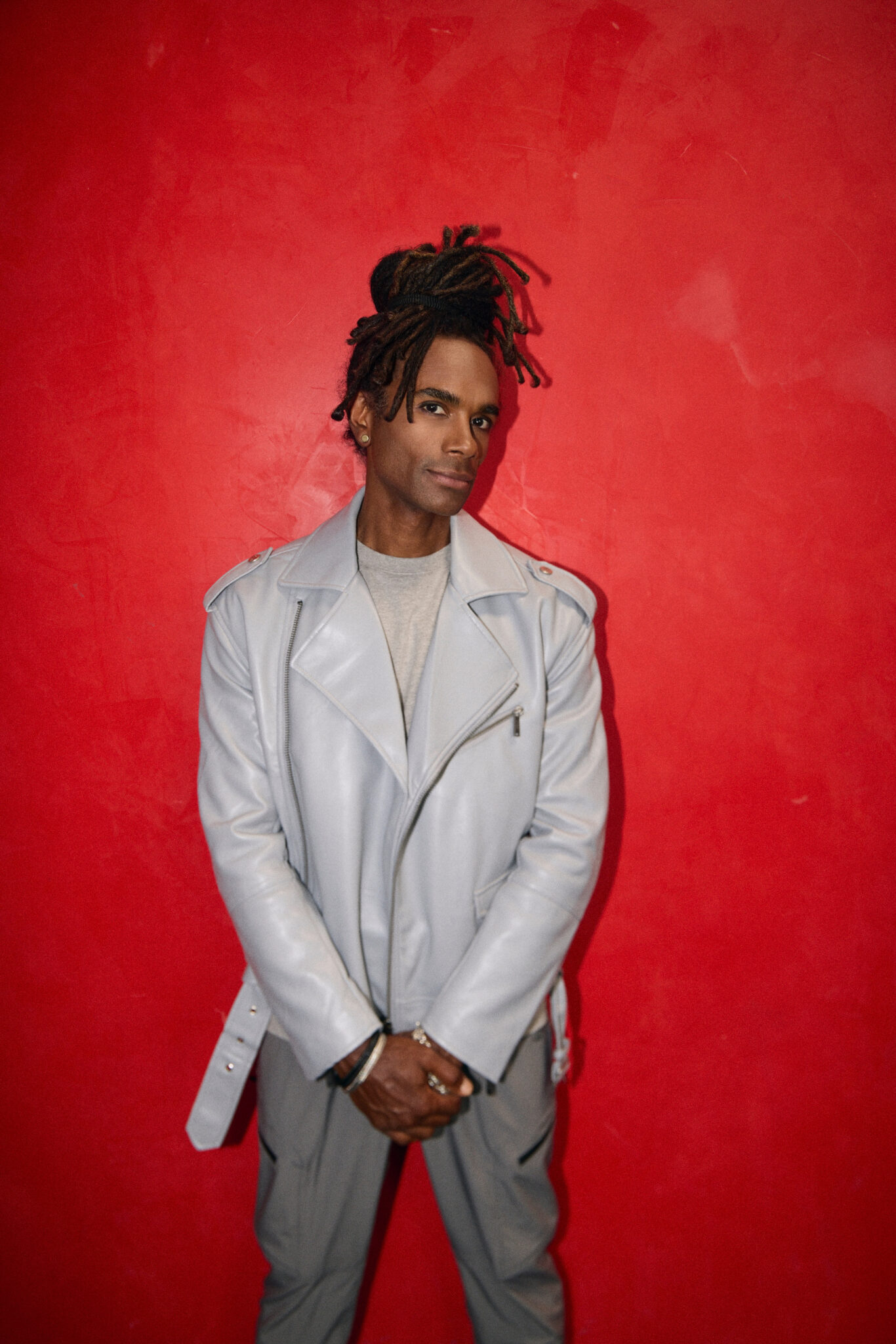
Our conversation touched on music, fashion, his early years growing up in Paris, and the experiences that have shaped his perspective over time. We also explored the lasting cultural influence of Milli Vanilli, his upcoming book, Blame It on the Game, and the importance of being able to share his story in his own words. What makes conversations like these meaningful is the opportunity to look beyond someone’s public image and better understand the individual behind it. For Morvan, whose life has unfolded in front of audiences for decades, there is still so much to discover.
A Conversation with Fab Morvan
Zoey Cross: Fab, first, I want to thank you for taking the time to sit down and have this conversation with me. It’s truly an honor and a pleasure. You’ve lived such an interesting life, and your journey has touched so many different aspects of music, fashion, and culture. I’m looking forward to hearing more about your experiences, your perspective on everything you’ve been through, and, of course, your upcoming book, Blame It on the Game. But more than anything, I’m happy we have this opportunity to simply talk and get to know the person beyond the music.
Before we talk about Saint Laurent, Milli Vanilli’s legacy, and your creative work today, how would you introduce yourself to our readers who may be discovering your story for the first time?
Fab Morvan: I would say that I am a singer, songwriter, producer, an obvious creative, who was robbed at the beginning of his career of being able to express himself fully with his partner Rob Pilatus. It took years for me to stand back up from the whole deal, reinvent myself, forgive them, forgive myself, feel free, move on, start a family of four, and discover that life can be beautiful.
Zoey Cross: Absolutely, I can’t agree more. Let’s talk a little bit about your journey and earlier influences. Growing up in Paris, what part of your family surroundings and your culture first drew your love towards music, fashion, and self-expression?
Fab Morvan: Well, you see, my grandfather was a musician, but he was also a baker. When you’re Creole and live in the Caribbean, we go there on vacation. He had this accordion, and he was a virtuoso when it came to playing the instrument. I was just hypnotized when he would get with his friends and play and go into a solo, and watch my parents transform into kids. The parents’ wall would disappear, and suddenly it was like, wow, they look like kids now. They’re smiling, they’re happy. It looked like magic to me.
I thought to myself, I want to do that. So that’s where the thing started. When we gather around, we can take spoons or tap the table, get some guitars, and then they start singing. For me, going back to the island was always that joy of life. I would go back to Paris, and the weather was never as good as in the Caribbean with the sun. So I always longed for this music.

This is why I went into music and made it almost like a safe place, a safety net, because my growing up in Paris was not great between my parents. Music was my safe place. Writing poetry was my safe place. I wanted to become an archaeologist. I was always worried about the world. When I would go to the airport, I would look at the screen and the announcement of destinations: Egypt, London, America, South America, Bogota. I noticed at an early age that the world was very big.
My parents used to play all kinds of music. My dad played Otis Redding. My mom played some opera music from Maria Callas. But we played salsa, merengue, Cuban music, and zouk from the Caribbean. I grew up on a lot of Caribbean music, African music, world music. So I was aware that there was a world out there, and I was always curious.
When hip-hop came along, I started looking at people who looked like me, who had a culture that they were connected to. There was hip-hop, DJing, graffiti, and dancing.
When I discovered hip-hop, I clung to it.
I didn’t speak English, so I had to take a dictionary to translate whatever I was listening to. Bob Marley was my first musical influence. My mom used to play Bob Marley, so that music pulled me in. It’s funny because when I translated the words, the words and the feeling matched. That was, for me, like, wow, it’s weird because I didn’t know what he was saying, but at the same time, I felt what he was saying.
Year after year, discovering music and realizing that this is like a language that we all understand. Eventually, I called it a universal language. Music has saved my life. The reason why I’m still here is because I decided to stay with music. And because I decided to stay with music, I realized that you’ve got to put the work in if you want to get to where you want to get to.
I was an athlete before, so I understood what discipline meant. When I look at my heroes, I was like, ‘Okay, I got work to do.’ Just like an athlete looking at Michael Jordan and saying, ‘Okay, if I’m going to get to that level, I’m going to have to get at it every day.’ And that’s what I did. I started learning how to write a song. What is the science behind writing a song? Because there’s a science behind everything. Then you learn it, and it becomes natural. I learned guitar. I learned how to produce. That’s when I did my first solo album called Love Evolution. I gained confidence day after day in the studio, realizing I can do this. But at first, my confidence was ripped away by the bullies, by the jokes.
Zoey Cross: You’ve experienced so many beautiful highs and difficult moments throughout your career. What have those experiences helped you learn about yourself?
Because that has to be a big exploration within yourself, to learn yourself, to know what you can do.
Fab Morvan: Well, the thing is, I went to rehabilitation, and then I sat down with psychiatrists. They kind of showed me the lay of the land. ‘Hey, listen, you want to heal? This is what you got to do. But you’re going to have to read on it. Once you start reading it, you’re going to start to see yourself in those pages, and you’re going to understand that when you use those tools, those tools can lead you to freedom.’
‘You free yourself from whatever you’re going through. So if you do the work, it’s going to be all right. But if you’re not willing, then you can’t expect to end up anywhere but at a police station, in jail, or six feet under. It’s up to you.’
And I was like, ‘Okay, I got the message.’
I went to this very famous bookstore that used to be in LA called Bodhi Tree. By walking around there, I picked up all kinds of books. Those books helped me understand the inner mechanism of the human being. I took the knowledge that I built and put it into my music. So my music became an extension of what I am.
I’ve been doing this for years. I’ve been on stage in Europe for over 30 years, but in America, they had no idea. I’ve been working on my craft. Michael Jackson is one of my many heroes for various reasons, like the discipline, the work. James Brown is another. I remember having that VHS tape, and I watched James Brown explaining the inner workings of the band, how he worked with the band, the dances he created, and how he connected everything.
I watched a documentary on Bob Marley, a BBC documentary. So I had those three tapes that allowed me to grasp the art, not the business, the art. I never understood that it’s show business. It’s the music business. As an artist, like many, we see the music as love. We see the music as expressing ourselves. Because when you become an artist, there’s a reason. You want to express yourself. Something happened to you; not enough love. And then you get into the music, and you find love within the music.
But not everybody comes from a good place when you enter the music industry. It is an industry, and you don’t get that. You think everybody is nice, so you trust everybody. Especially when you come from nothing like me. I had to steal to eat food in a foreign country to survive.
And then someone comes, one of the biggest producers, like Quincy Jones, comes to you and says, I want to work with you. You see the records on the wall, you see the concerts, like the Quincy Jones concerts that you had seen on TV. You’re not going to bite the hand that’s going to feed you and take you to your dreams. You’re going to say yes, not realizing that you’re entering a plantation.

Zoey Cross: They call it show business, and a lot of people forget it is business, then show. But with that, let’s talk more about Saint Laurent and the Fall 2026 campaign featuring your number one hit.
Fab Morvan: But you know what happened? I had nothing to do with that in reality. Nothing at all. They just picked it. I was like, ‘Whoa, that was amazing!’ Because I’m a fashion guy. I love fashion. When I saw that, I thought to myself, ‘I’ve followed Yves Saint Laurent for years. I’m a big fan.’
But when he put that in, I was like, ‘This guy is leaving. The creative director of Yves Saint Laurent is leaving after 11 or 12 years.’
And I was right because now “I’m Gonna Miss You.”
I got a message that some dude is leaving, and people are like, ‘Oh, he’s celebrating 12 years.’
I was like, ‘No, no, no. I think the guy is doing this using this song.’
So it’s kind of cool that someone has created this, a person that I respect a whole lot for what he’s done with the company. He turned it into a $2 billion company with creativity. When it comes to creativity, I’m a big fan because creativity and discipline have taught me how to survive and how to define who I am. Creativity is the one element that has allowed me to remain in this business and to be who I am.
If I didn’t have creativity and understood that it’s like a muscle, you’ve got to work it. Otherwise, you’re going to lose it. ’m a fan of expressing myself. I love writing. I paint as well. All those things I did to save myself, not knowing that this is who you are. Once I realized this is who you are, I was like, ‘Okay, so maybe I can take advantage of the fact that this is who I am.’
I didn’t have to force it. I’m naturally made this way, but I didn’t really know because it was taken away from me. As I went back to discover myself, I realized this is who I am. This is who I always was. And this is why, when people are going to listen to my new EP that’s coming this year called Life Is Beautiful, people are going to scratch their heads.
You don’t get to that level without putting in the work. Just like a pilot, to work for a commercial airline, you don’t get that license just like that. You got to fly. You got to put those hours in. But I love to work. And just like Mike Tyson said, ‘You got to do it like, even though you hate it, you have to do it as you love it.’
Playing the guitar, you have to deal with that in your mind. ‘What am I doing this for? Where is that going to lead me?’ But somehow, the heavens, God, the universe. I’m not exchanging the universe for God. I’m about God always. I’ve been saved. There’s no way I could have done that by myself. I’m a firm believer that I’m not alone, and everything happens for a reason.
When I speak now and listen to what I say, I can tell that my words connect with people. I see that I have a responsibility with everything that I’ve learned to share my story. Sharing is caring, and I do love people.
Zoey Cross: That brings me to my next question. As a younger audience discovers Milli Vanilli through fashion campaigns, streaming platforms, and social media, what would you love for them to know about the group beyond the headlines?
Fab Morvan: I would like them to know that as much as people call me not real, I am real and will be recognized as an icon of real. Ain’t nobody more real than that. I have children, four children with the same woman. I’m very proud of it. Children are the way to awaken you and to realize what’s important in life and who you are as a human being. When you take care of several lives and make sure that they’re good, they’re taken care of- not money, presence, love. Daddy is here. Whatever you need, I’m going to be there.
This is why I wrote this book, Blame It on the Game, to leave something for them. I want to leave something for my kids so that when they grow up, they can understand who Pops is. Because I went deep with this one. I just opened myself. I do believe that when you are vulnerable, that’s the most powerful thing you could do for your soul, for your mind.
I know for men, being vulnerable is kind of a taboo subject. But let me tell you, as an artist, you need that to achieve your best. And as a human being, by expressing what you felt, what you feel, instead of holding on. Because when you hold on to emotions and trauma, they become petrified. And then when your emotions are petrified, they will pull you down. You won’t be able to fly high in the sky.
Now I’m looking at the future and the now.
I make all my decisions right here, right now, and I follow my heart. Because there was a time when I listened to others because I was not secure in myself. I made wrong decisions because I was not secure in myself. I didn’t know much about life. I relied on people.
Zoey Cross: I was going to ask you, is that the reason why you wrote the book? You wanted people to have more guidance through Blame It on the Game?
Fab Morvan: I wrote the book, like I said, for my kids because I know that they will grow into this crazy world that we’re in, which is very different from the world that I grew up in. But I know that when you read the book, you see that I turn darkness into light with a certain frame of mind and positive attitude. They live with me, so they know Pops is always about that.
I play different types of music, and they know about this Tibetan prayer that is to quiet your mind. They do that sometimes because sometimes they’re all wired. I say, come on, let’s sit down. Let’s do it and relax. I play piano music. I play with their emotions.
Music is a family member for me. I play the right music, and I can see that now they want to read. Even though they can’t read, they’re starting because I have 13, 10, and 5 and 5.
I started late, but I wanted to make sure that I was there. Because I come from a divorced family, and I know what it’s like to feel like you’re dangling by yourself. You don’t feel safe.
Because I know what it’s like not to feel safe as a kid, I didn’t want that for my kids. I wanted to make sure that when I found the right person, I’d be there. I want to make sure that these individuals that I brought into this world, I’m going to give them everything I can. Not money-wise, but emotionally, so that we have a balance that will make sure that when they see danger, they’re able to identify it. So I try to teach them the good.
With this book, I’ve had a lot of reactions and people telling me, ‘Oh my God, this book made me realize how much trauma I was hiding from myself.’
And let’s not go into epigenetics. That’s another thing. Epigenetics: genetics is information that is lodged into your DNA. So when we go back far enough, there’s a lot of stuff going on. It’s complicated to be able to find that balance within yourself and understand: is something wrong with me? I know what that is.
But I can tell you that when something is wrong with you, the best thing you could do is go to nature, take your shoes off, and listen to birds. It sounds crazy, but those things saved my life. Those things brought me to who I am. Silence will allow you to listen to that voice that comes from within. It’s like a guiding light in the dark.
Go this way. Keep doing what you’re doing.
Zoey Cross: So I have another question for you because I assume we’re wrapping up. Where can readers find Blame It on the Game?
Fab Morvan: Blame It on the Game is going to be out on the 25th of October. It’s going to be, to begin, on Amazon. A Kindle version and a hard copy.
Zoey Cross: Oh, wonderful. That’s excellent. So what is one of your favorite chapters in the book?
Fab Morvan: Oh, Fab Nilly. About my Fab Nilly. I was born on May 14th, so I’m fond of May 14th. So I made the chapter number 14. Page 110, “Fab Nilly.” And then the other thing at the end of the book is called “Fabisms.”
Fabisms are my philosophy, my isms, things that are my tools, what I believe in, and what brought me to this point. I believe that you have to remain a student for life, never a master. I will never be a master. I will keep myself a student.
When you’re grounded, you have to know that, with confidence, you can lose yourself to arrogance. So you have to remain grounded, especially for an artist. People coming to you, ‘Oh, you’re the greatest. Oh, you’re the greatest.’ I went through that. I lost myself in that.
Because I stood back up and kind of reverse-engineered what happened to me, I understand the danger of show business. Now that I have my family, who I work for and will do everything for, they lead by example. They keep me on my toes. It allows me to look at myself differently.
Becoming a man, becoming a father, and having a family is the number one thing for me. Everything I do is for them, and it guides me in doing what I do. As an artist, when it’s time for me to make music, I feel like I have no pressure. I just have to feel.
And when you feel and don’t think too much, it’s going to happen. Something’s going to come up, and we just have to be able to catch it and put it on track.
Sing it from the heart, and it’s going to touch people. So I know what I got when I’m sitting around. It’s nice. It’s very nice. I’m proud of it.
I’ve tested it with my kids. Because they know the songs, if I sing a little bit, they keep singing the choruses. Out of nowhere, sometimes they call, ‘Papa, can you play this song?’
I say, ‘You like it?’
‘Yeah, I like it.’
There’s no judgment. It’s just, ‘I like the song.’
Our children are the most honest.
Zoey Cross Well, first of all, I want to say thank you so much for taking the time to sit with us here at The Garnette Report. It’s been my absolute pleasure. This conversation has been awakening, and I wish you so much success with this book, Blame It on the Game, out October 25th on Amazon in hardcover and Kindle.
Fab Morvan: By the way, my mom’s second name was Zoe, but with just the E. Without the Y. It’s a great name.
Zoey Cross: My full name is Zoey Monique Cross.
Fab Morvan: Great name.
Zoey Cross: Nice to meet you. And I can’t wait to read the book.

For Fab Morvan, life beyond Milli Vanilli has become a journey of self-discovery, resilience, and creative freedom. Rather than allowing the past to define him, he has spent decades reclaiming his voice, refining his craft, and finding a deeper sense of purpose through music and family. With his memoir Blame It on the Game, now available on Amazon, and his upcoming EP Life Is Beautiful, Morvan is embracing a new chapter shaped by experience, personal growth, and the freedom to tell his own story. His journey serves as a reminder that reinvention is not about forgetting the past, but learning from it and continuing to move forward.
Photo. Credit: Nieder mueller/katharine tacon/Jonas Ernst